In our daily cooperation with global procurement teams, EPC contractors, and industrial distributors, we have seen how essential a structured approach is for maintaining stable machining performance. As one of the sub-brands under HOSTON, Leichman focuses on creating service workflows that support long-term equipment reliability and help customers manage demanding production environments. When we discuss the standard procedure of successful CNC machine service, our intention is to clarify each step that contributes to consistent and predictable results.
Initial Assessment and Service Planning
A successful process for CNC machine service begins with a structured evaluation. We start by reviewing the operating condition of the equipment, current production requirements, and any issues reported by technicians on site. This allows us to design a service plan that aligns with the customer’s workload rather than interrupting it. During this stage, we communicate closely with project managers and engineering teams to confirm priorities, spare parts availability, and safety requirements. Our company has always placed emphasis on quick communication, and this approach helps ensure that service activities are predictable and coordinated. At the same time, the service plan incorporates the customer’s long-term machining schedule so that maintenance supports productivity rather than reducing it.
Execution, Calibration, and System Optimization
Once the plan is confirmed, we proceed with detailed maintenance tasks that reflect professional 5 axis CNC machining services standards. Our team focuses on step-by-step execution, including component cleaning, lubrication checks, alignment verification, and system calibration. We also evaluate vibration levels, tool interface conditions, and controller parameters to prevent hidden issues from developing. By working methodically, we help customers maintain consistent machining accuracy and reduce downtime risks. During the process, our engineers also provide guidance on routine care, operating habits, and tooling strategies so that the customer’s internal team can manage daily usage more effectively. This structured workflow is essential for keeping equipment stable in demanding industrial environments.
Performance Review and Ongoing Support
After completing the service tasks, we document the results, summarize adjustments, and review performance with the customer. This closing step ensures transparency and helps the customer understand how each action improves reliability. Our company continues to provide responsive consultation, parts recommendations, and follow-up support to help maintain long-term productivity. This approach is especially valuable for partners who manage multiple production lines or require predictable service intervals.
Practical Application: Cycle Boost Case
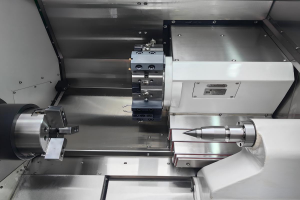
We apply this workflow consistently across projects. In one case, through our Cycle Boost solution, we supported a Vietnamese auto parts factory that aimed to enhance batch turning efficiency. By implementing a structured service plan and optimizing their LK-200L CNC Turret Lathe, our Leichman team helped the customer stabilize machining output and streamline their daily operations. This example shows how a clear service procedure supports reliable performance in real production scenarios.