CNC machines act as the backbone of modern manufacturing. They offer unmatched precision and automation for complex tasks. However, many operators overlook the specific functions of individual components. This lack of knowledge often leads to inefficient operations or premature breakdowns. We believe that understanding the various CNC machining parts is the first step toward optimizing production.
In this guide, we will break down the ten critical subsystems of a CNC machine. We will explain how they communicate with each other. We will also discuss upgrade options to help you maintain peak performance.
What Are the Parts of a CNC Machine?
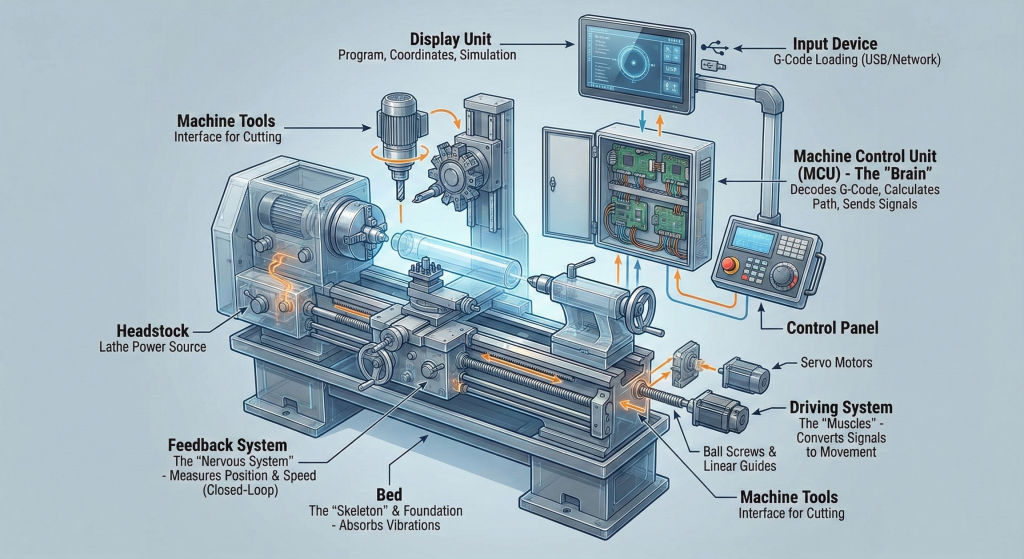
A CNC machine is a complex assembly of electronic and mechanical systems. Each part plays a vital role in the final output. Here are the ten key components that drive success:
1. Input Device
The input device is the entry point for data. It functions as the mechanism to load the CNC program, often known as G-code, into the machine.
In the past, manufacturers relied on punch tape readers. These were slow and prone to errors. Today, the technology has evolved significantly. We now utilize USB flash drives, Ethernet cables, and wireless transfer methods. These modern inputs allow for rapid design changes and seamless workflow integration.
2. Machine Control Unit (MCU)
The MCU serves as the “Brain” of the operation. It reads the G-code provided by the input device and decodes it. The MCU translates these codes into electrical signals that the machine understands.
This unit handles complex calculations. It determines the path of the tool through a process called interpolation. Once calculated, the MCU sends precise commands to the driving system to execute the movement.
3. Machine Tools
This term refers to the mechanical components that hold and move the cutting implement. On a lathe, this might be the tool turret. On a mill, it is often the spindle slide.
We often refer to the entire setup of holders and changers as CNC machining tools. This system acts as the direct interface between the machine structure and the material being cut. Its stability determines the surface finish and accuracy of the part.
4. Driving System
If the MCU is the brain, the driving system represents the “Muscles.” It converts the electrical signals from the MCU into physical mechanical movement.
This system consists of two main elements. First, there are the motors. Servo motors are preferred for their high precision, while stepper motors are used in less critical applications. Second, there is the transmission system. This includes ball screws and linear guides that move the axes smoothly along the bed.
5. Feedback System
The feedback system acts as the “Nervous System” of the machine. It constantly measures the actual position and speed of the cutting tool. It then reports this data back to the MCU.
This creates a closed-loop control. Linear scales and encoders monitor movement in real-time. If the machine is told to move 10mm, the feedback system ensures it moves exactly 10mm. This correction loop is vital for preventing errors during long production runs.
6. Display Unit
The display unit allows operators to see what is happening inside the machine. It serves as the visual monitor for viewing programs, machine coordinates, and critical error messages.
Older machines used simple monochrome CRT screens. Modern CNC machines feature advanced touch-screen LCDs. Many of these display 3D simulation graphics, allowing us to visualize the cut before it happens.
7. Bed
The bed functions as the “Skeleton” of the machine. It is the heavy, robust foundation usually made of hardened cast iron.
The bed carries the weight of all other CNC machining parts. Its primary role is to absorb the intense vibrations caused during the machining process. A heavy, stable bed ensures that the tool does not chatter against the workpiece.
8. Headstock
The headstock is a critical component specific to CNC lathes. It houses the main CNC machine spindle, the driving motor, and the gearing mechanisms.
Its role is to provide rotational power to the workpiece. The quality of the headstock directly influences the concentricity and the speed at which you can turn a part.
9. Tailstock
You will find the tailstock located opposite the headstock on a lathe. It moves along the bed to accommodate different material lengths.
The tailstock supports long workpieces. This support prevents the material from wobbling or deflecting under the pressure of the cut. It can also hold tools like drill bits for center drilling operations.
10. Control Panel
The control panel is the “Human Interface.” It contains the physical controls required for setup and operation.
This panel includes buttons, switches, and the critical emergency stop. It also features the Manual Pulse Generator (MPG), or handwheel. Operators use the MPG to manually position the axes during setup.
How to Upgrade CNC Machine Parts?
Even the best machines experience wear over time. Knowing when and how to upgrade is essential for maintaining a competitive edge.
Diagnosing the Need
You must watch for signs of failure. Common indicators include backlash in the axis, unusual noise from the spindle, or outdated software interfaces that slow down programming.
Common Upgrades
We recommend several strategic upgrades to extend machine life:
- Controller Retrofits:Upgrading the MCU and display can provide faster processing speeds and a better user interface.
- Drive System:Swapping out worn ball screws is often necessary to restore tolerance holding capabilities.
- Coolant Systems:Moving to high-pressure coolant systems improves chip evacuation and tool life.
These upgrades are particularly important if you are manufacturing high-precision items, such as CNC machining of aerospace parts. In that industry, even a micron of deviation is unacceptable.
The “Repair vs. Replace” Dilemma
Deciding between repairing a part and replacing the machine is difficult. We suggest a simple checklist. If the repair cost exceeds 50% of a new machine’s value, consider replacement. If the foundation (bed) is still solid, upgrading individual CNC machining parts is usually the more cost-effective route.
Work with Leichman
At Leichman, we understand the intricacies of machine maintenance. Whether you need to upgrade your current CNC machine or replace specific components, we are here to support you. We provide high-quality components that ensure your production line remains efficient and accurate. Sourcing reliable CNC machining parts from a trusted partner minimizes downtime and maximizes profitability.
Choose Leichman for Your Next Lathe
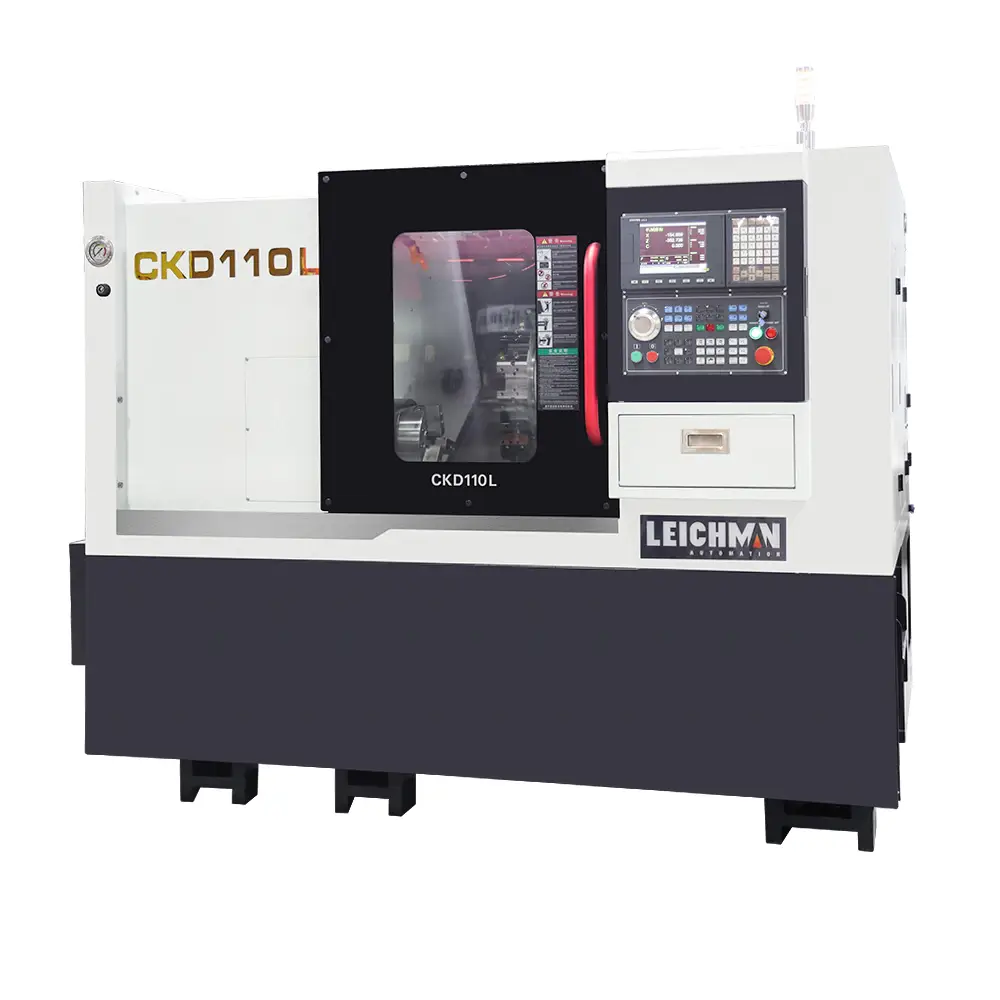
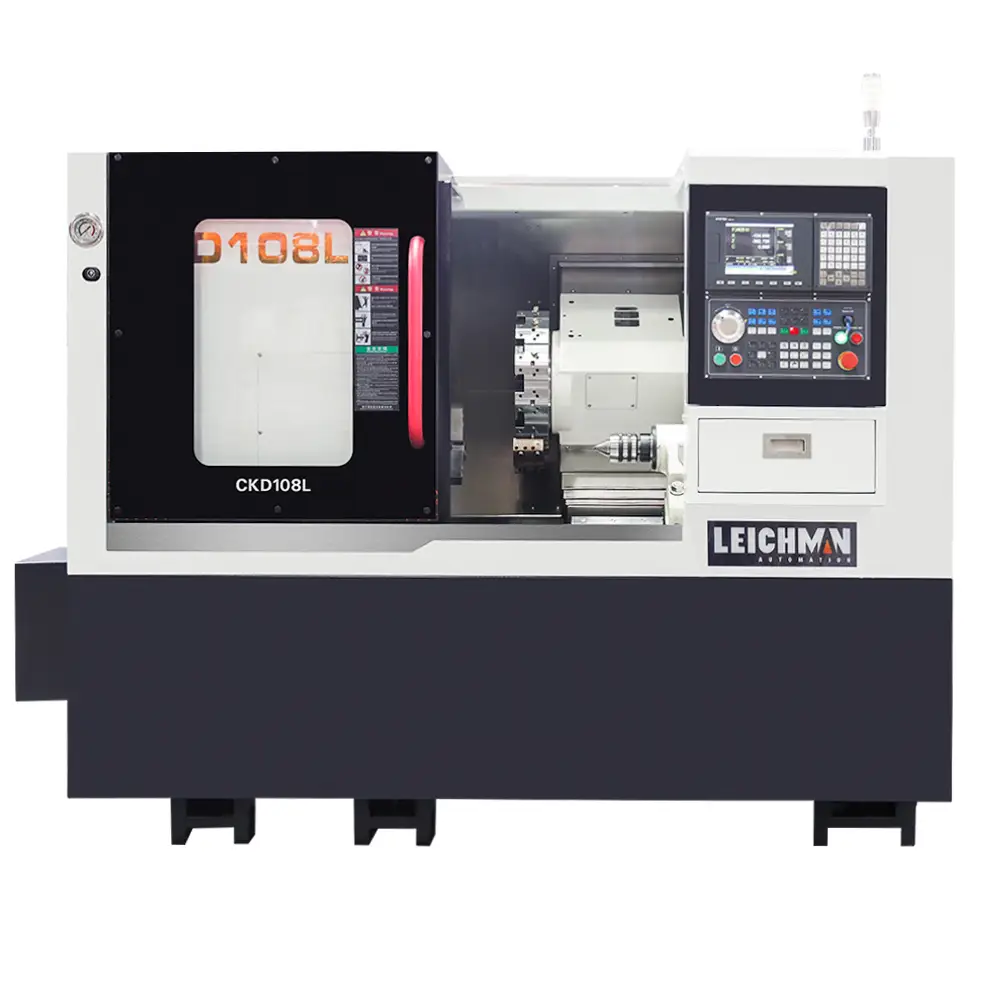
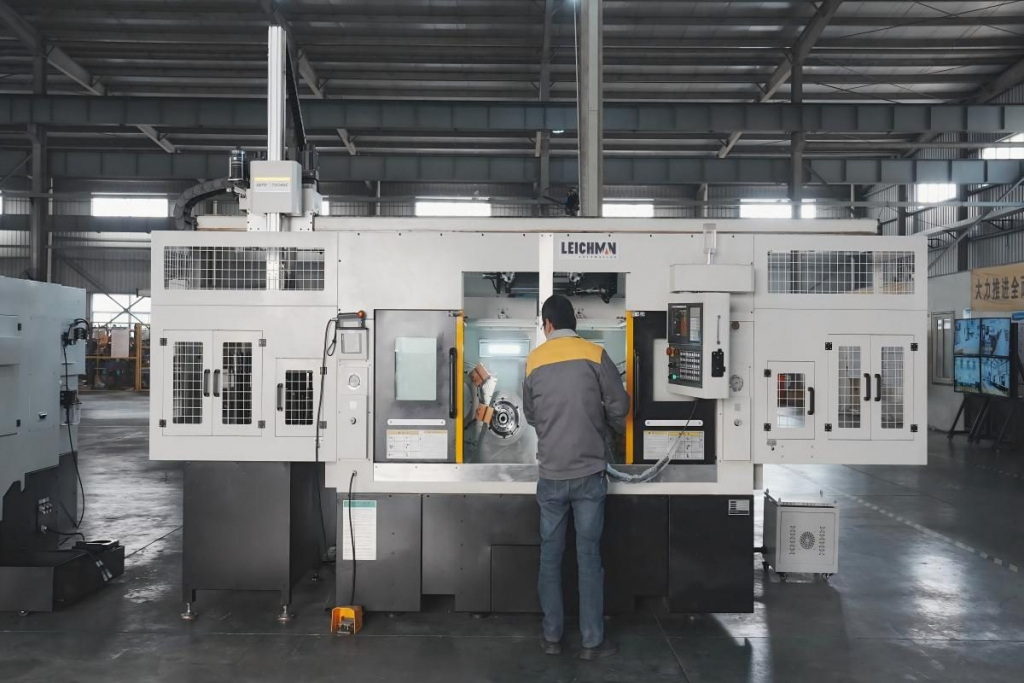
If you find that upgrades are no longer sufficient, it may be time for a new machine. We invite you to explore the range of CNC lathes available at Leichman. Our machines are built with the robust components discussed in this guide. We prioritize stability, precision, and ease of use in every model we build. Let us help you take your manufacturing capabilities to the next level.
For more information on our capabilities and inventory, please visit us at https://www.leichman.cc/.