In the realm of high-precision manufacturing, the synchronization of moving parts is what separates a world-class component from a scrapped workpiece. For B2B decision-makers looking to invest in new production capacity, understanding the internal kinematics of a machine is essential for evaluating long-term accuracy and maintenance costs. At Jiangsu Leichman Automation Technology Co., Ltd., we take pride in our engineering heritage as a sub-brand of Hoston. Our Leichman CNC solutions are built on mature manufacturing processes that prioritize the harmony of motion, ensuring that every moving part contributes to a high-efficiency output that is widely trusted by global clients.
The Primary Axes: X, Y, and Z Motion
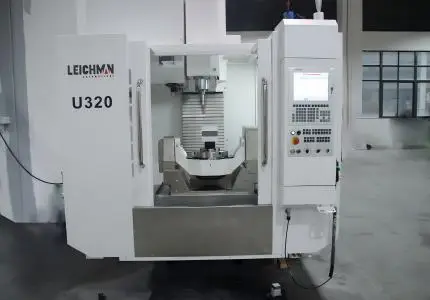
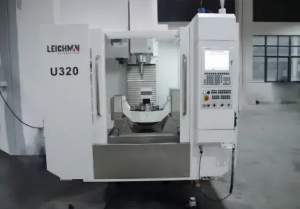
To understand which components move during CNC machining, we must first look at the coordinate system. In a standard 3-axis vertical machining center, the movement is typically distributed between the tool and the workpiece. When you evaluate CNC equipment for sale, you are essentially looking at how these movements are executed:
The Spindle (Z-Axis): This is the heart of the machine. The spindle holds the cutting tool and rotates at high speeds. In most vertical configurations, the spindle head moves up and down along the Z-axis to control the depth of the cut.
The Worktable (X- and Y- Axes): While the tool spins, the workpiece is often moved horizontally. The “saddle” moves along the Y-axis (front to back), and the “table” moves along the X-axis (left to right).
For more complex 4-axis or 5-axis machines, additional rotational components move. These include rotary tables or tilting heads that allow the tool to reach the workpiece from virtually any angle. At Leichman, we utilize Japanese THK guide rails to ensure these linear and rotational movements are executed with near-zero friction and maximum repeatability.
Supporting the Speed: The Role of the Drive System
Movement is nothing without control. Behind every physical shift in position is a sophisticated drive system. As leading CNC equipment manufacturers, we understand that the speed of a move (the feed rate) is just as important as its precision. The components that facilitate this movement include:
Servo Motors: These are the “muscles” of the machine. They receive electronic signals and convert them into precise mechanical rotation.
Ball Screws: These convert the rotary motion of the motors into the linear motion of the table or spindle.
The Controller: This is the “brain.” We integrate Syntec controllers into our equipment to manage these complex calculations in real-time.
When these components move in unison, the machine achieves high efficiency with a low error rate. Our simple, industrial-grade design ensures that the structure supporting these moving parts is rigid and compact, which is a popular aesthetic standard that also enhances the overall image of your factory.
Secondary Moving Components: Tool Changers and Coolant Systems
Beyond the primary axes, several secondary components move to facilitate a continuous production cycle. An Automatic Tool Changer (ATC) is a prime example. The ATC arm moves to swap out tools in seconds, allowing for complex parts to be machined without human intervention. Additionally, the coolant nozzles may move or be adjusted to ensure that the heat generated during high-speed cutting is properly dissipated.
At Leichman, our machines undergo continuous operational testing before leaving the factory to ensure these auxiliary movements are as reliable as the primary axes. This reliability is why we are a preferred choice for SMEs undergoing transformation and upgrading. Our direct-supply model from our own factory ensures you receive this high-end technology without the heavy price tag of traditional imported brands.
Why Component Quality Dictates Machine Longevity
Movement causes wear. Therefore, the materials used in moving parts determine the machine’s lifespan. By choosing internationally renowned brands for our core components, we ensure that Leichman equipment remains stable and durable even under heavy industrial loads. Low-quality guide rails or lead screws will develop “play” or backlash over time, leading to dimensional inaccuracies. Our use of premium THK components significantly reduces this risk, offering better value for your investment.
Furthermore, we support our B2B clients with a Low Minimum Order Quantity (MOQ), allowing even small-batch customized projects to benefit from our high-end engineering. Whether you need to customize the control system, the processing schedule, or even the color and logo of the machine, we provide the flexibility to meet the personalized needs of different industries.
Professional Consultation for Complex Motion Requirements
Selecting the right machine involves understanding how the moving components will interact with your specific materials and part geometries. Our professional foreign trade team provides free consultation services to guide you through this process. We offer one-on-one service that covers everything from initial product selection advice to the technical details of processing solutions.
As part of the Hoston family, we bring decades of experience to the table, helping you navigate customs clearance and logistics so that your new CNC equipment for sale arrives safely and ready for installation. Our goal is to ensure that your investment in Leichman technology results in a rapid launch of your business operations and a sustained competitive advantage in your market.
Why Partner with Leichman?
The decision of which CNC equipment manufacturers to trust is a cornerstone of your business strategy. At Leichman, we combine high-end CNC equipment with mature manufacturing processes to deliver machines that are both beautiful and functional. Our focus on precision moving components ensures that your facility operates at peak performance with minimal maintenance requirements.
When you invest in our machinery, you are investing in a partnership that values your growth. From our factory-direct pricing to our comprehensive technical support, we are dedicated to helping you achieve excellence in every cut. Our machines are designed to be the backbone of your factory, providing the stability and precision needed to tackle the most demanding industrial challenges.
Conclusion
Understanding which components move during CNC machining—from the high-speed spindle to the precision-guided worktable—is vital for any business looking to optimize its production line. By prioritizing high-quality drive systems and rigid structural designs, Leichman ensures that every movement is a step toward perfection.
If you are ready to upgrade your manufacturing facility with equipment that offers high efficiency, durability, and exceptional value, our team is standing by to assist you. Explore our full range of CNC solutions today and see how our commitment to quality can transform your production capabilities. Contact us for a free consultation and let us help you find the perfect machine for your unique industrial needs.