Our work with advanced machining systems has shown us how essential a well-configured dual-spindle structure is for modern production environments. As part of HOSTON’s product family, Leichman focuses on solutions that support precise, stable, and reliable workflows for industrial users. When we describe how a dual-spindle CNC lathe works, we emphasize real manufacturing logic because our customers—from metal fabrication plants to international equipment distributors—depend on practical and repeatable performance in their daily operations.
Core Operating Principles of a Dual-Spindle System
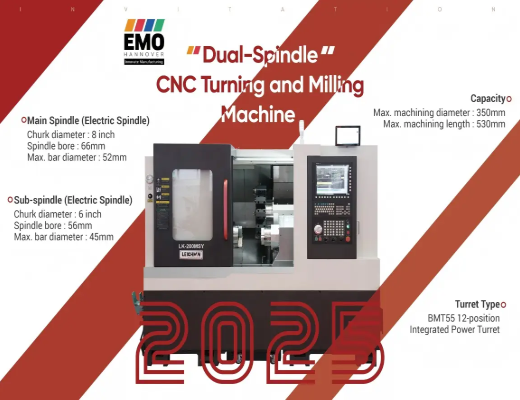
A double spindle CNC machine operates through coordinated control of two independent spindles, enabling a part to be machined on multiple faces without repositioning. In our applications, the first spindle manages the initial turning processes, while the second spindle receives the part automatically for follow-up operations. This structure reduces idle times and helps us manage small-to-medium precision components with stable cycle consistency. We rely on this mechanism when producing parts that require both turning and milling features, ensuring that each step remains aligned with engineering requirements. By using a double spindle CNC machine in this way, we maintain predictable accuracy while supporting high-mix production needs.
Workflow Integration and Tooling Coordination
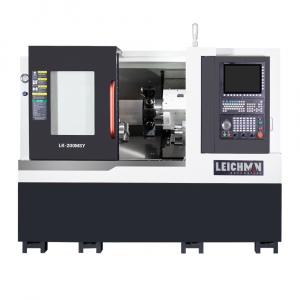
For us, understanding how a dual-spindle lathe functions also includes examining how the turret, tools, and motors collaborate during machining. A twin spindle lathe synchronizes part transfer through controlled gripping and spindle speed matching, preventing vibration or misalignment during handoff. This is especially relevant when we use the Leichman LK-200MSY Double Spindle CNC Turning and Milling Lathe. Equipped with a 12-station BT55 servo-powered turret, the system indexes tools quickly and positions them with stable servo control. With milling capability integrated into the same setup, a twin spindle lathe enables us to complete roughing, finishing, and drilling tasks within one continuous workflow. These characteristics support our goal of minimizing handling steps and maintaining consistent part quality across different batches.
Application Advantages for Industrial Users
When our company deploys a dual-spindle system, we focus on practical value rather than theoretical advantages. A double spindle CNC machine helps us manage cross-industry orders with flexible scheduling and fewer bottlenecks. For customers in metal fabrication, machinery distribution, or international trade, the dual-spindle configuration supports shorter delivery cycles and reduces dependency on secondary processing. At the same time, a twin spindle lathe improves our ability to respond to urgent orders, because the integrated workflow allows us to manage workloads with stable repeatability. In projects requiring both turning and milling features, the LK-200MSY CNC Turning and Milling Lathe assists us in maintaining the same dimensional standards from sample stages to mass production.
Conclusion: How We Apply Dual-Spindle Logic in Real Production
In summary, we rely on the working principles of dual-spindle technology to create efficient, stable, and coordinated machining workflows. By integrating the functional advantages of a double spindle CNC machine into our daily operations, and by applying the structured machining flow of a twin spindle lathe, we support customers across the global metalworking supply chain with dependable and streamlined processes. This approach reflects how we at Leichman use dual-spindle systems not only as equipment, but as part of our overall production methodology.